WITH THE FREE PATRONAGE OF

CARNEVALE DI PUTIGNANO

CHURCH OF SAN PIETRO APOSTOLO

CHURCH OF SAN PIETRO APOSTOLO












Struggles in defense of autonomy
In 1559, according to the decree of King Ladislaus, the university of Noci claimed that all landowners within 3 miles of the town would pay tithes and vigils, as it had long been done by nocesi towards Mottola. The University of Putignano opposed harshly, both because the municipality had existed since time immemorial, before Noci, and because by the intercession of kings and princes he had been licensed to "water, wood, graze, sow and spend the night" throughout the territory of Mottola which also included Noci. The Noceses attempted judgments against the Putignanesi, but they were always wrong, only in 1703 they succeeded in getting reason, but the Putignanesi resorted in appeal to the Provincial audience and I didn't succeed in sprouting the victory, but they also saw the mayor of Noci in prison.
There were long quarrels and rebellions, the minds of the Putignanesi in particular, were exasperated and had feelings of revenge, because if the Noceses were sighted and captured while chopping wood or taking water from the Putignanese territory, they were treated humanely, vice versa to the Putignanesi defendants of crime, assets and assets were confiscated as well as being arrested and brutally abused. The opportunity for revenge was not lacking, in fact on the occasion of the arrest of some nocesi the Putignanese people tried in every way to taunt them, but the Mayor Dr. Giannarcangelo Miccolis filled them with delicacies, against the opinion of the population. A farmer Giuseppe Castellana called Campagna stirred up the crowd, had the gates of the city closed and took up arms followed by the common people and went in search of the Mayor, the Governor and the Lawyer of the University to kill them. As luck would have it, a carpenter told the Castellana that the Noceses were on the doorstep and that therefore the presence of the whole people was required to defend the city.
"Scannacornacchia"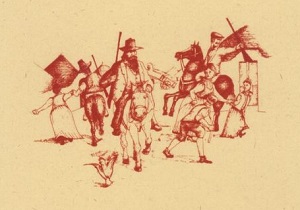 From October 9th to November 9th, in 1781 a band of infamous people, from Castellana, almost daily disturbed the quiet town. It was captained by Niccolò Spinosa, a Castilian man better known as Scannacornacchia, who came out of jail, in which his wife had been imprisoned on average, forming a bullying and gangster group. Sacannacornacchia died on sale smuggling, strong of protection by the Count of Conversano, kidnapped many women and released or imprisoned some people at his unquestionable judgment. The dott. Oronzo Martinelli, born in Lecce, but an intervention Putignanese, involves 150 people to face Scannacornacchia, the band was defeated, thanks to the joint revolt of the citizens. In 1782 Spinosa Scannacornacchia died murdered by his lover Domenica Pugliese known as Falcona. Still other revolts were had in the country the crowd set fires and made an uproar in the whole country and near the Town Hall. Injured and dead were the direct result of the riots that occurred in the area.
Proud Independence
It is narrated in the writings of Pietro Gioia that "In Putignano, men are educated as children to be parks, strong in spirit, hardworking and serious in the entrance and in the tone of their voice ... they are these ends of understanding and brought to the difficult. It will seem incredible what Vincenzo Oliva of Putignano did, in Naples in 1662 under the Viceroy Count of Pennarda, however it cost him his life. However, he placed himself at the head of the nobles and set himself up as Duke of Saxony and Lieutenant General of the kingdom, and created his ministers and promulgated edicts and removed gabelles "
A popular legend tells that Frederick II arrived in the town, seeing the inhabitants who looked at him calmly, approached some of them and reproached them for not being greeted. Then an old man heard the scolded said to the King "We are in our house and we greet no one, you, our guest, have the task of greeting"
This behavioral attitude was the fruit of a secular habit of freedom, on the part of the Putignanesi, in fact the dominion of the Beneddetini first and then of the Balì then, was more a formal domain than a real one, rather bland also for the presence on the territory, for which the citizens having to administer themselves, ill conceived by obligations and impositions, this is why the territory was often the place of riots. For this reason, thanks to a true spirit of freedom and independence, we can say that the Putignanesi have created a community society on their own, thanks to their own strength.
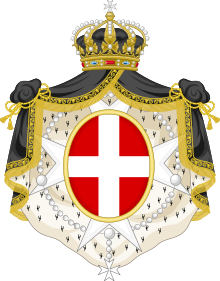
 Il Balì G.B. Carafa in 1442 obtained from King Ferdinand I of Aragon that Putignano and Fasano should free from tax payments, only the university was required to pay the duty, as imposed by Queen Giovanna. This Balì born noble from the Carafa branch of the Stadera was a dynamic man, worthy of mention, who was able to widely administer the bailiff, taking advantage of the unlimited protection granted him by King Ferdinand. His coat of arms was adorned with the evangelical motto "Hoc face t vives" "Work well, wisely and you will live in the esteem of posterity too" in the coat of arms in addition to the three silver bands on a red field, he had put the steelyard symbol of justice, probably to remember that every action had to be weighed.
The balì G.B. Carafa was already prior of Capua and adviser of the King when in 1450 he ascended to the office of Balì, a period during which our castle had about two hundred fires (= families) and despite the fact that two centuries had passed since the destruction imposed by Frederick II, the walls they still attested the events that happened.
The Carafa in 1463 granted the construction of a common, public oven, given the conditions in which the municipality poured. Seven years later, instead, he had the little church of San Giovanni built for dressing during the Balì entry ceremony built outside the walls. The church was rebuilt in 1530 and abandoned in the 1700s due to the neglect of the new owners. His great work was to build very strong walls around the castle, to make the town impregnable. 14 round and 12 quadrangular towers were built in addition to the moats and crossbowmen and for the convenience of the citizens he had another door opened which was called Porta Barsento, so that this was in front of the ancient Casale of the same name, tragically destroyed by the Duke of Mottola. Porta Grande, also known as Porta Maggiore,
consisted of an arch without a door and an atrium with small balconies for the sentinels, facing a large bastion then, there was a second arch that closed. On this
bastion there was all that was needed to offend the detained enemies, besides there was the drawbridge and a system of water pipes to flood the atrium and drown those who were here.
In 1474 the Carafa almost completely rebuilt the church of San Pietro, decadent because of the vetustità.
In 1477, thanks to his intercession, Santo Stefano's reconciliation went from the Lingua di Provenza to that of Italy, thus ending the struggle between the two languages. From this time, the Balì resided either in the Castle of Santo Stefano or in that of Putignano or in Fasano. Tired he gave up his office in favor of his legitimate son Alexander and retired to private life.
From October 1503 the bailiwick was occupied by the Spaniards, due to the war between these and the French.
 The order was divided into eight sections Called Languages, ie Nations (Italy, Provence, Auvergne, France, Aragon, Castile, England, Alemagna) and to the government of each of these a Dignitary was appointed, which included part of the Grand Council of Order.
The Balì and the Commendatori were among the dignitaries.
The bailiffs could be of three different classes: the former were called conventuals and each Lingua had one, they were the most conspicuous and important after the Grand Master, the latter were the Capitulars and the difference of the former not required residency requirements in the convent, the third were Balì ad Honorem.
The Commanders had to send a tribute into the treasure of the Order which was called "Responsio", this tribute was obligatory under penalty of losing the Commenda and the dress. Furthermore, the duty to keep nothing for families.
The internal disagreements over territoriality on the Abbey of Santo Stefano led after 228 years of Benedictine garrison to the Knights Gerosolomitani, in the early days of the Abbey belonged to the Lingua di Provenza, but the interventions in 1477 finally passed to the Lingua of Italy.
As the income dedicated to the Abbey rose from year to year, the Lingua d'Italia in 1769 ordered the dismemberment of the Abbey (the Bailiwick of Santo Stefano included only in the territory of the current Fasano) founding 2 Commendas: Putignano the Greater with an income of 3000 Ducati and Putignano la Minore with an income of 1000 Ducati. Both were administered by a single Commendatore.
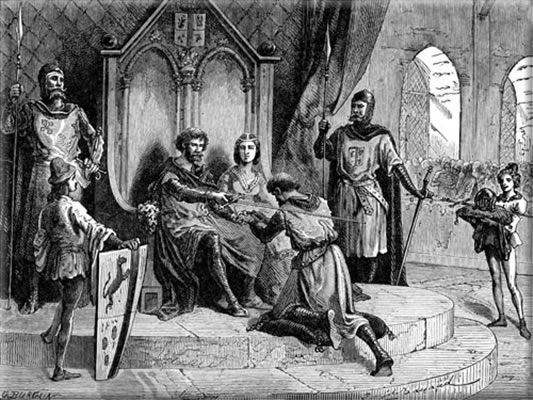
The first entry of the Balì in the city constitutes an event of great involvement for all the citizens, in fact all the Authorities, the Clergy and the people were moved going to the doors of the town on Via Castellana. The Balì worked with sounds, sounds and musket discharges of the soldiers, who accompanied the church of San Giovanni, from 1530 instead to the church of San Sebastiano dei P.P. Observant, probably because it is wider.
The Balì dismounted from the horse or carriage and in the request it was possible to access the garment with the clothes of Gala.
Then preceded by the Clergy, by the Religious, by the Brotherhoods and followed by the authorities and the people, by the festive ringing, on the other in the city riding under a canopy, whose rods were held by the most elusive doctors. To his right was the Captain, to the left the Mayor, both holding the reins of the horse. Arriving at Porta Maggiore, he descended from his horse by the rite of the adoration of the Cross, in fact the Archpriest Prior of Saint Peter dressed in white pin, the expectation and offered her the Cross before which he knelt. Declared the Camerlengo as a sign of publication and obedience, he presented him with the keys of the city and prisons on a silver platter.
After the ceremonial, the procession reassembled itself and continued until the church of S. Pietro where the Te Deum was sung.
The Balì then sat on the throne and the authorities went to kiss his hand as a sign of obedience.
At the end of the ceremony, preceded by the Clergy, followed by the Captain, by the Mayor, by the Elect and by the Doctors, he is withdrawn in the building next to the church. Il Balì Enjoyed the Jus Pascendi of the state territory, or the livestock breeders had to pay an annual tribute to the head, he in return at his own expense visited churches and holy places.
Citizens have many duties: for example, if the Bailiff heard blasphemy, the blasphemer had to pay a tarì, if a cane appears in a vineyard in time of harvest the owner would be sanctioned. There were penalties and fines of all kinds, even on work waste (the shoemaker who emptied the tanks in the street in which you had made with leather tanning paid 5 fine grits)
In 1358 Putignano returned to a distant part of the Feudo di Santo Stefano. It is said that when the Hungarians and the Bitontines came to Putignano to submit it to King Louis of Hungary, the citizens thought well of going to meet with wine and food, thus managing to suffer a great deal of damage, the chroniclers of the time appealed them Wisemen.
Fra Guerrino di Castelnuovo named Balì succeeded with his decisions in accommodating all citizens and appeasing internal disagreements, appointing his personal vicar for spiritual jurisdiction in all the places of the desperation. In 1437 the Bailiff of Don Marino Malatesta rich and powerful devotee of King Alfonso of Aragon, after having persuaded the Putignanesi to travel for these in the war against the Duke of Anjou, formed a citizen army and ran to help him. Having obtained the victory in 1439, the Balì received the honorary title of Vir Nobilis which gave the data from the ancient kings only to the titles, while citizenship was allowed to extract 240 some of oil from the olive groves of Santo Stefano
 This website project born from the idea of Gianni Musaio is enclosed in a team spirit and is the result of the collaboration of people, ordinary citizens, who care about the historical, cultural, artistic, geographical, food and wine heritage of the historic center of Putignano, a town in to live.

The historic center of a town is the fulcrum of the territory, where ancient stories, traditions and culture of those who preceded us are preserved. You too can contribute to leaving the testimonies of the past to the generations to come, taking care of them.