WITH THE FREE PATRONAGE OF

CARNEVALE DI PUTIGNANO

CHURCH OF SAN PIETRO APOSTOLO

CHURCH OF SAN PIETRO APOSTOLO









Unlike other types of flours, the mixed chickpea and barley flour is not only used in the gastronomic and culinary fields, in fact, thanks to the presence of saponins, which have the ability to convey hydrophilic molecules, that is, capable of incorporating water and retaining it on a oily surface such as skin, farinella can also be used for the preparation of detergents and other cosmetic products for the body.
Even in self-production you can easily prepare farinella-based detergents and shampoos. Just mix it with warm water, avoiding the formation of lumps through uniform circular movements, with the possibility of adding a few drops of essential oil to obtain the fragrance. These preparations must be used immediately to avoid oxidation and deterioration.
You can also prepare face and body masks with various functions: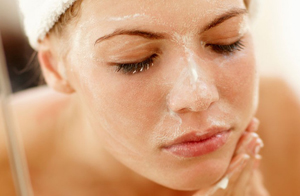
By carefully mixing 3 tablespoons of farinella, 3 tablespoons of brown sugar and mixing everything with the addition of 3 tablespoons of sweet almond oil, you get an excellent exfoliating scrub useful for removing waste cells and renewing the skin. By combining these ingredients, the cleansing power of the farinella is exploited which, thanks to the saponins, absorbs the fat particles and removes them, leaving the skin dry and clean. Furthermore, dead cells are removed thanks to the rubbing action of cane sugar.
Another type of cream is the "anti-aging" one, which is prepared simply by adding a pinch of turmeric to the combination of farinella and warm water. The one obtained is a recipe that promises a rejuvenated and radiant skin, thanks to the powerful antioxidant action of Indian turmeric in combination with the cleansing action of chickpea flour.
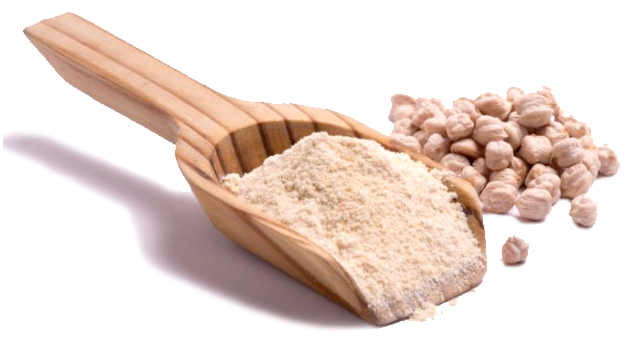
The chickpeas, used for farinella, are the seeds of the Cicer arietinum plant belonging to the legume family. The use of the flour they produce is slowly returning to take on a leading role in daily nutrition as it is rich in vegetable proteins, vitamins and mineral salts that bring numerous benefits to the body.
100 g of this flour provides about 316 calories, divided as follows:
almost 60% of the nutrient composition is represented by carbohydrates and fibers,
15% vegetable proteins of high biological value,
6% fat,
the remaining percentage is made up of water.
The lipids present in chickpea flour are fats with a high nutritional value as they are represented by polyunsaturated fatty acids (linoleic acid) essential for the health of the cardiovascular system.
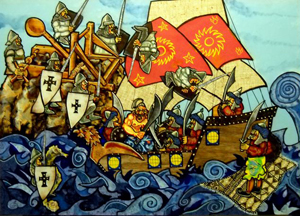 Starting from 1317, the Benedictines handed Putignano into the hands of the Order of the Knights of Jerusalem, and the fiefdom became "Baliaggio", under whose command there was, that is, the Balì. Later came the bloody and frightening Saracen invasions that sowed terror and death. It was during one of these that the inhabitants had the idea of sprinkling their whole body with a hazelnut-colored powder and showing themselves to the usurpers as if they were monsters. The Saracens, thinking of a serious and mysterious contagious disease that had hit the inhabitants of the town, fled away in terror. What was that mysterious dust that saved Putignano? The Farinella.
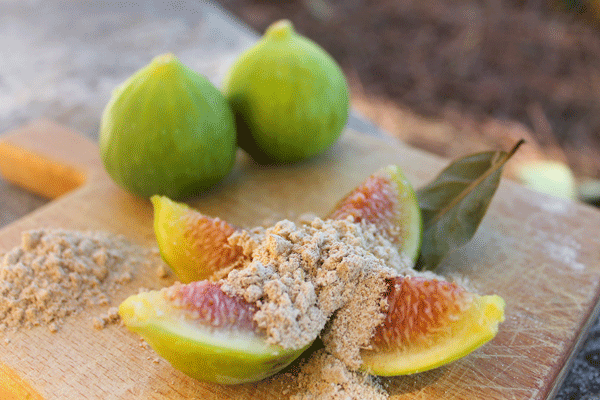
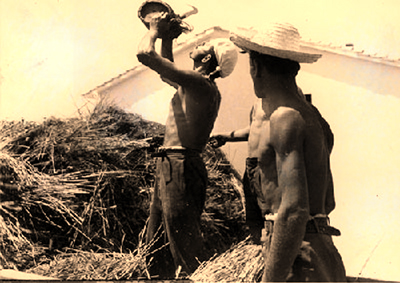 Grazie alle proprietà nutritive e al forte apporto calorico, i contadini consumavano la farinella nella pausa pranzo delle intense giornate di lavoro nei campi. Lo mangiavano tal quale, oppure con acqua, olio e sale, oppure accompagnato, a seconda del periodo, con fichi freschi o secchi. Portavano con sé la farinella in un sacchetto di stoffa chiamato "u vol'z" in cui c'era anche un cucchiaio. Data la consistenza farinosa, lo hanno ingoiato accompagnato solo da lunghi sorsi di vino o acqua per evitare il rischio di soffocamento.
 This website project born from the idea of Gianni Musaio is enclosed in a team spirit and is the result of the collaboration of people, ordinary citizens, who care about the historical, cultural, artistic, geographical, food and wine heritage of the historic center of Putignano, a town in to live.

The historic center of a town is the fulcrum of the territory, where ancient stories, traditions and culture of those who preceded us are preserved. You too can contribute to leaving the testimonies of the past to the generations to come, taking care of them.